How to Build Your Own Casino Strategy Journal
Most casino players treat gambling as pure entertainment: they spin the reels, place chips on the table, and hope for the best. Yet professional players and disciplined hobbyists know that the difference between casual play and smart play lies in tracking your decisions. One of the most effective tools for doing so is a casino strategy journal.
A strategy journal is not about writing down every win or loss like a bookkeeping exercise. Instead, it is a structured record of how you play, what works, what doesn’t, and how your emotions influence your decisions. Over time, this log becomes a mirror of your gambling habits, allowing you to refine strategies, avoid common mistakes, and increase your enjoyment of the games.
This article will guide you step by step through building your own casino strategy journal—from deciding what to track to using insights to improve your long-term performance.
Why Keep a Strategy Journal?
At first glance, writing down your casino experiences may seem unnecessary. After all, games are random, aren’t they? While it’s true that chance rules, the way you interact with the games is far from random.
- Pattern recognition: By recording sessions, you can spot whether certain games consistently drain your bankroll faster than others.
- Emotional awareness: Tilt, frustration, or overconfidence can ruin a session. A journal shows you how often this happens and what triggers it.
- Bankroll discipline: Writing down stakes, wins, and losses helps you stick to limits.
- Strategic refinement: Whether in blackjack, poker, or even slots, a journal helps you see which tactics are worth repeating.
In short, your journal transforms gambling from a blind leap into a controlled experiment.
Step 1: Choosing Your Journal Format
The first decision is whether your strategy journal will be digital or physical.
- Physical notebook: Traditional and simple. Many players prefer handwriting because it makes the process feel personal and intentional.
- Spreadsheets: Perfect for those who enjoy statistics. Tools like Excel or Google Sheets let you create graphs, calculate averages, and filter data.
- Apps or custom templates: Some gambling enthusiasts design strategy trackers in Notion, Evernote, or specialized bankroll apps.
Choose whichever format you will actually stick with. A journal is only valuable if you use it consistently.
Step 2: What to Track in Your Journal
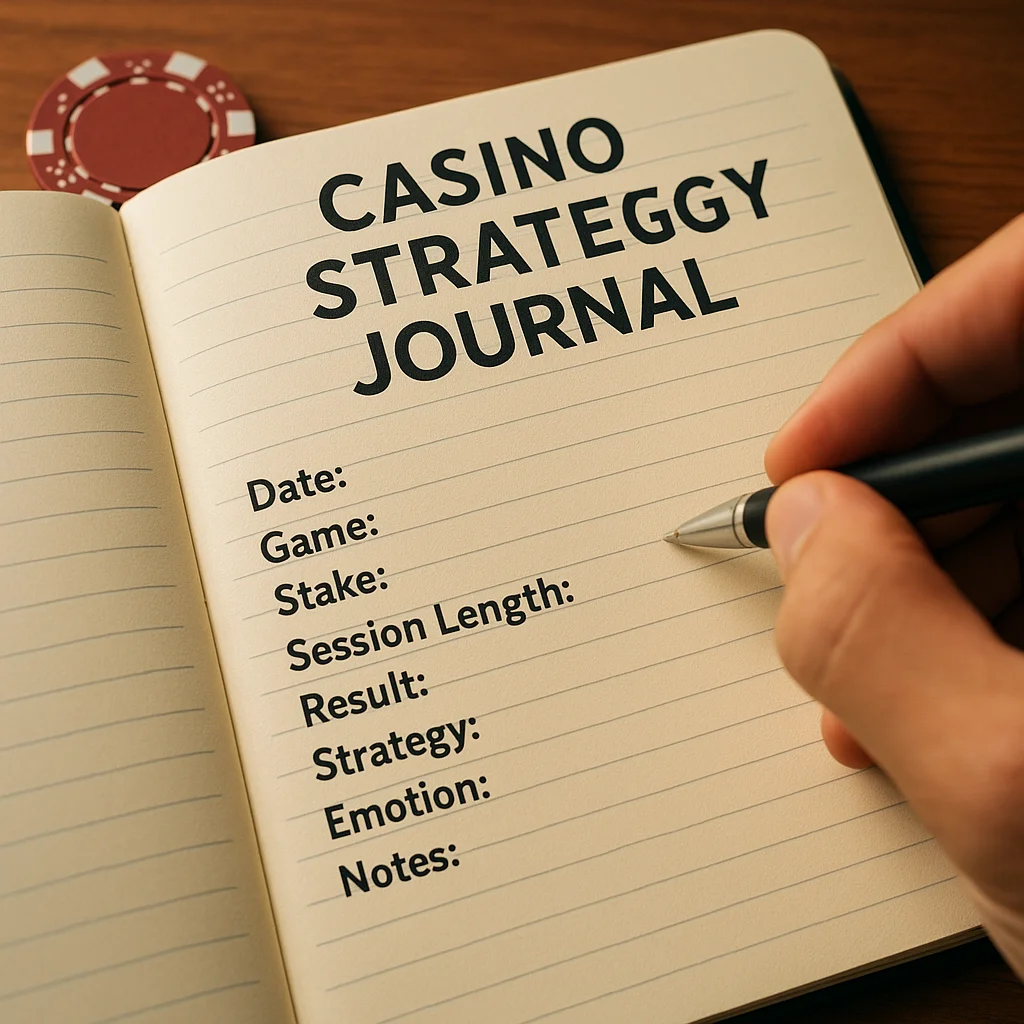
A professional strategy journal doesn’t just log “won $50, lost $30.” It captures the full picture of a session. Here are key elements to include:
- Date and time – Helps you notice patterns in when you perform best (e.g., fresh in the morning vs. tired late at night).
- Game type – Blackjack, roulette, poker, slots, crash games, etc.
- Stake size – The amount you risked per hand, spin, or round.
- Session length – Time spent playing. Longer sessions often lead to fatigue-driven mistakes.
- Result – Net win or loss in dollars or units.
- Strategy used – For example, basic blackjack strategy, Martingale betting, or cautious slot play.
- Emotional state – Calm, confident, tilted, frustrated, or overexcited.
- Notable events – Big wins, bad beats, risky decisions, or lucky streaks.
- Lessons learned – One or two short insights from the session.
The last point is the most important. A single sentence like “I tilted after three losses in a row and doubled bets recklessly” is worth more than all the numbers combined.
Step 3: Adding Depth with Advanced Metrics
As your journal grows, you can track more advanced statistics:
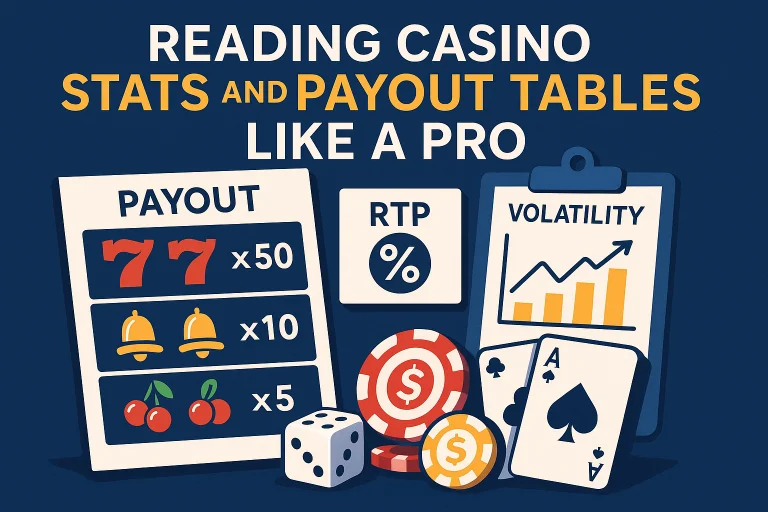
- RTP comparisons: If you play slots, note the RTP of each game and compare results.
- Volatility preferences: Track whether you perform better in low or high volatility games.
- Win/loss ratio: See how often sessions end positive versus negative.
- Average bet size: Monitor whether you creep above your planned stakes during play.
- ROI (Return on Investment): Calculate (Total Wins – Total Losses) ÷ Total Wagered to measure efficiency.
These figures highlight whether your strategies are improving or if you need to adjust.
Step 4: Organizing the Journal for Clarity
Cluttered notes are useless. Professionals structure journals for clarity and quick review. Here are a few methods:
- Daily logs: One page or sheet per session, with key details.
- Weekly summaries: At the end of the week, write a reflection on what worked and what didn’t.
- Monthly analysis: Use graphs or written summaries to evaluate trends.
For example, you might notice that your losses increase dramatically in sessions longer than two hours. That insight alone can save you hundreds over time.
Step 5: Using the Journal to Improve
Writing is only half the process. The other half is reviewing your notes and applying insights. Here’s how to make your journal actionable:
- Spot recurring mistakes. If tilt shows up three times in a month, create a rule: always take a 15-minute break after two losses in a row.
- Adjust strategies. If aggressive betting fails more often than it succeeds, scale back.
- Optimize game choice. If blackjack consistently shows positive results while slots drain your budget, focus more on blackjack.
- Test new approaches. Use the journal to plan controlled experiments, such as trying smaller bets for longer sessions, then comparing results.
The key is honesty. A strategy journal is only as useful as your willingness to admit mistakes.
Example Entry from a Casino Strategy Journal
Date: July 20, 2025
Game: Online Blackjack
Stake: $10 per hand
Session Length: 1 hour
Result: +$75
Strategy: Basic strategy with occasional double-downs
Emotional State: Calm, focused
Notable Events: Lost three hands in a row but stuck to plan, recovered later with two double-down wins.
Lessons Learned: Sticking to strategy prevented tilt. Patience paid off.
This short entry contains everything needed to evaluate performance and repeat positive behavior.
The Psychological Benefits of Journaling
Beyond statistics, a strategy journal helps with mental discipline. Many players underestimate how emotions drive their choices. Writing down feelings—anger after a loss, excitement after a win—creates awareness. Over time, you become better at recognizing tilt before it takes control.
A journal also helps reframe gambling as entertainment rather than a desperate chase for money. When you track experiences, you focus less on one bad beat and more on the bigger picture of growth.
Long-Term Value of a Casino Strategy Journal
A month of journaling provides useful insights. A year of journaling transforms the way you gamble. Long-term benefits include:
- Sharper decision-making – You know exactly which games and stakes work best for you.
- Reduced losses – By eliminating reckless behavior, you preserve your bankroll.
- Increased enjoyment – Gambling becomes less stressful and more strategic.
- Responsible play – Journaling helps ensure you never gamble beyond your means.
Some players even treat journals as personal memoirs, documenting their gambling journey with stories, big wins, and lessons learned along the way.
Conclusion
Building your own casino strategy journal is one of the smartest moves any player can make. It requires little more than discipline and consistency, yet the rewards are enormous. By recording your sessions, emotions, and strategies, you transform random play into a structured activity with clear lessons.
In the end, gambling will always involve chance. But a strategy journal puts you in control of the part that matters most: your own decisions. Start simple, stay consistent, and watch as your insights turn into a more enjoyable and responsible casino experience.